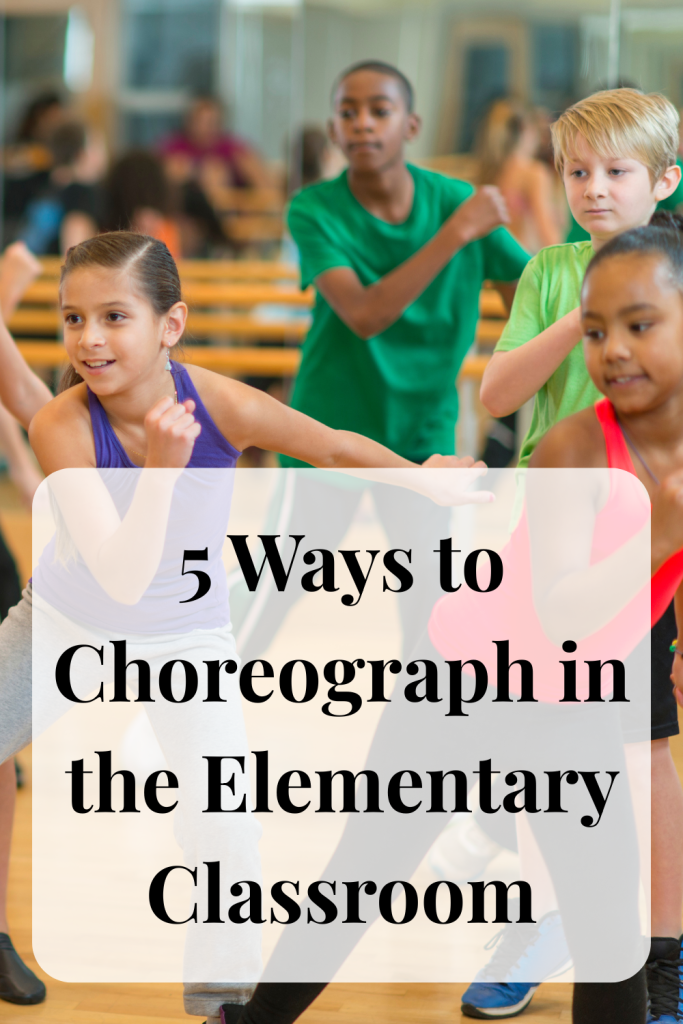
Choreographing with students in the elementary classroom isn’t just about dance—it’s about nurturing creativity, collaboration, and cognitive growth. Research shows that when children choreograph, they engage in rich thinking processes that support problem-solving, group dynamics, and self-expression (Giguere, 2011). Here are 5 evidence-based ways to make choreography meaningful and manageable in your classroom.
1. Name Dance
- Ask students to draw the first letter of their name in the air using their hand in front of them.
- Use their foot to draw the second letter in the air.
- Again, explore different sizes of movement.
- Have students choose their favorite version of each letter to create the first two movements of their “name dance.”
- Continue with the third letter using a different body part (e.g., elbow low to the ground).
- Keep going until they’ve created a movement for each letter of their first name.
- Students with shorter names can continue with their middle or last name.
- Add variety by drawing letters:
- With a leg behind them
- While traveling
- Using different dynamics: fast/slow, smooth/sharp
- Invite students to perform their name dance for a partner or the whole class, if they’re comfortable.
2. Story Dance
- Ask students to think of a simple story
- For example:
- going on an adventure
- finding a magical object
- meeting a new friend
- or use a story from class
- For example:
- Break the class into small groups. Each group will create a dance with three sections:
- Beginning: The introduction of the story (e.g., entering a forest, walking through a new land).
- Middle: The action or conflict (e.g., climbing a mountain, escaping a storm).
- End: The resolution (e.g., finding treasure, returning home).
- Play music and give groups time to create and practice their dance.
3. Dice Dance
- Ask students to help you assign a dance move to each number on a dice.
- For example:
- 1= a spin
- 2= a star jump
- 3 = 5 skips across the room
- For example:
- Then roll a dice 6 times to create a dance as a class.
- Play some music a dance your choreography together!
- For an extension, use another dice and assign odd numbers slow and even numbers fast.
- Roll the two dice, the first number will be the movement and the second number will be the speed of that movement.
- You can try with different dynamics such as sharp/smooth, high/low, or small/big.

4. Movement Sentence
- As a class, create a short movement sequence with three parts:
- Beginning: A slow, controlled movement (e.g., stretching, gliding, reaching).
- Middle: A fast or energetic movement (e.g., jumping, spinning, galloping, skipping).
- End: A still, grounded pose.
- Students will perform the movement sentence as a group.
- After a few rounds, challenge students to create their own unique movement sentences with a clear beginning, middle, and end either individually or in pairs.
5. Spelling Dance
- This choreographic device is similar to the Name Dance.
- Choose a spelling word your class is working on and write it on the board so everyone can see.
- As a class, create a movement for each letter of the word.
- Try different body parts, levels, dynamics, speed etc.
- For example:
- The first letter can be drawn with the nose up high.
- Second letter, both elbows draw it down low very slowly.
- Third letter, the left food draws it largely on the ground.
- Once you have a movement for each letter, perform it as a class. Option to dance it to music.
Why This Matters
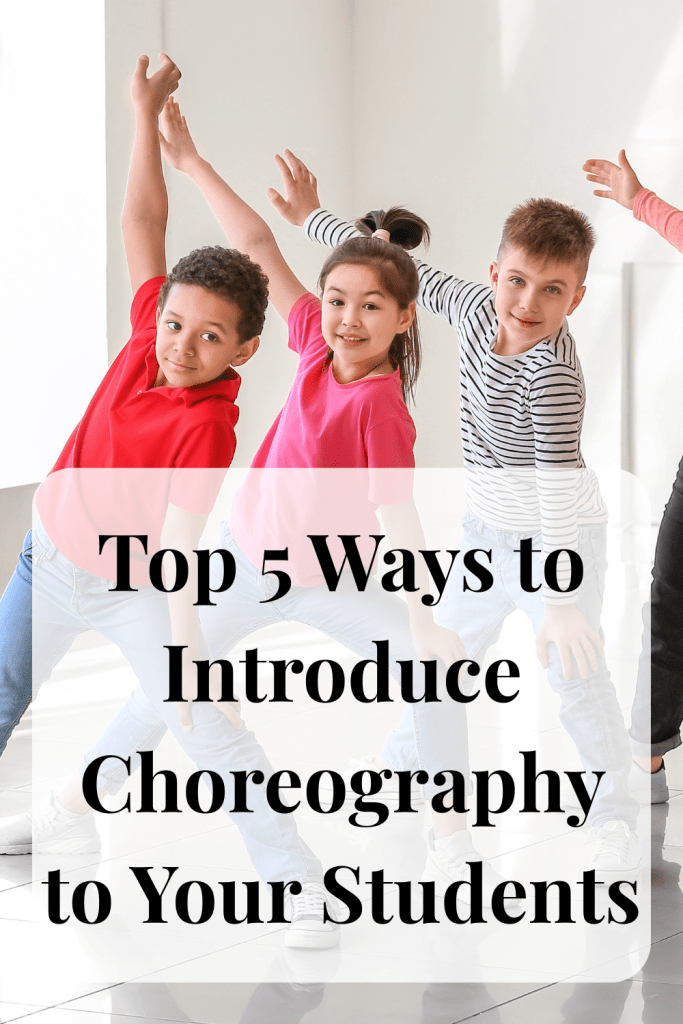
According to Giguere’s study, choreography engages children’s cognitive, social, and emotional capacities simultaneously. When students create dances, they’re not just moving—they’re problem-solving, analyzing, negotiating meaning, and developing a sense of agency.
Want to Go Deeper?
Download a free choreography lesson for students here or explore our dance lesson bundles designed for classroom teachers here.

Happy Dancing!
— Megan

 Mindful Magic Movement
Leave a comment